
If You Can’t Hear It, You Can Feel It – Music for Deaf People at Illuseum Berlin
Illuseum Berlin
25. Sept. 2026
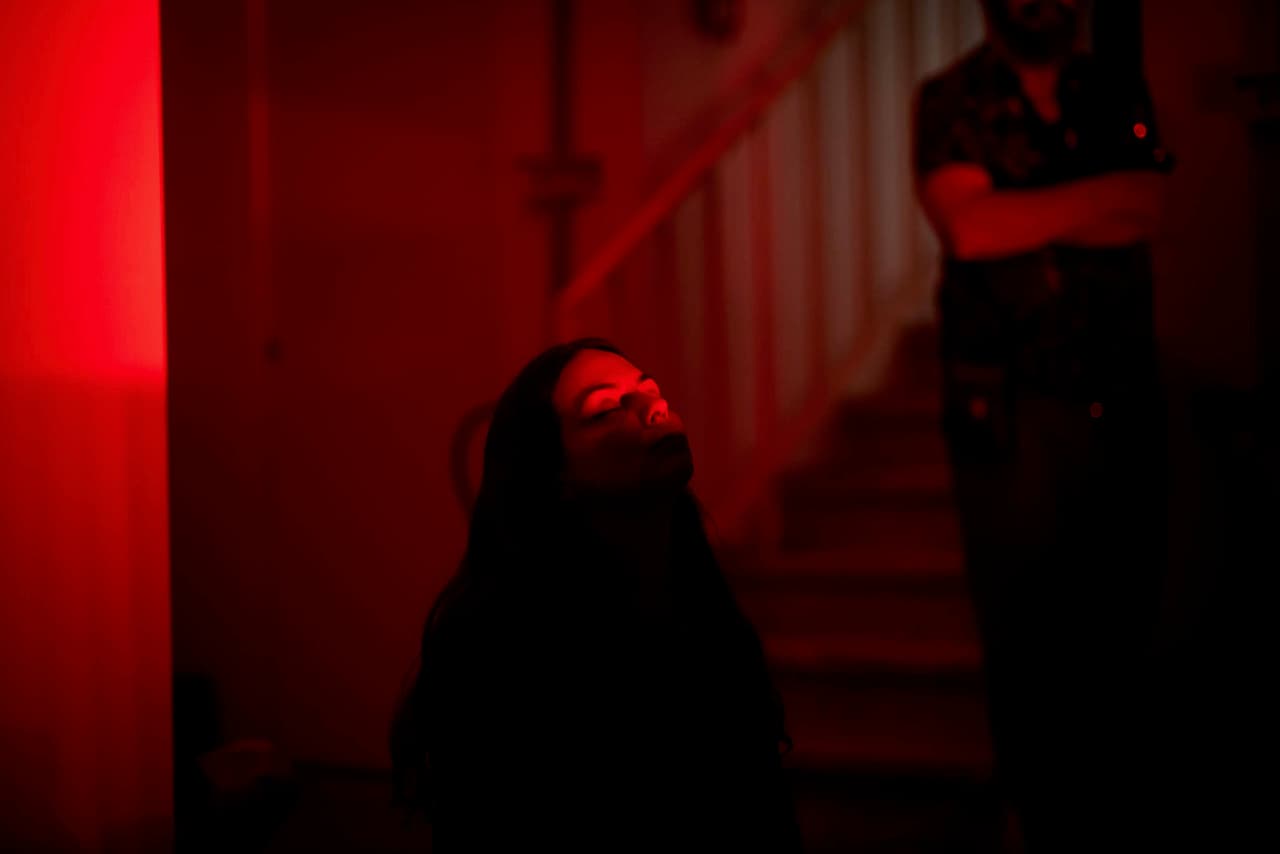
Berlin sounds. Berlin dances. Berlin feels. But what if you cannot hear music? We explore a topic that goes far beyond hearing and sound.
Berlin – a vibrant centre of art, culture and creativity. Since the fall of the Berlin Wall, the German capital has developed into one of Europe’s most dynamic cultural cities. Here, past and future meet. From improvised stages in Berlin-Mitte to renowned events around Alexanderplatz – Berlin lives, breathes and sounds.
Illuseum Berlin is a museum for the senses. Through illusions and optical phenomena, we play with our visitors’ sense of sight and balance: tilted rooms, powerful colours, different patterns and digital technologies allow art to be experienced in entirely new ways. Some of our illusions are also accompanied by music or sound, including our Hypnotica illusions and our Augmented Reality exhibition “Alice in Wonderland”.
But what happens when you cannot hear that sound? How do these illusions affect our deaf visitors? What does music mean, and what does music feel like when the sense of hearing is absent?
These are questions we care deeply about. That is why we are exploring the fascinating world of music for deaf people and are particularly excited about our next event at Illuseum Berlin, where together with the sub_bar project we will explore creative ways of experiencing music – without relying on hearing.
Beyond Listening: Together with sub_bar, we present music as a universal language that can be felt!
Music is more than a sequence of sounds. It is emotion, expression and history. In cultures around the world, music is a central part of rituals, traditions and social life. It moves body and mind, connects people across linguistic and cultural boundaries and influences our mood, our health – our entire being.
For many deaf and hard-of-hearing people, music is far from inaccessible. Quite the opposite: music can be made tangible, visible and experiential.
And that is exactly what we are bringing to life at Illuseum Berlin together with sub_bar, a project by the eufonia.io platform.
Sub_bar is a community of artists and researchers dedicated to experiencing music through vibration rather than sound. Combining their passion for sound, art and science, the community has developed immersive installations that use low-frequency compositions to create an entirely new and transformative musical experience – while building a vibrant connection between hearing and deaf people.
Using subwoofers and projectors, a room at Illuseum Berlin is transformed into a musical pressure space – a space where music is concentrated into sub-frequencies that can be felt throughout the entire body.
From Hearing to Touch: The Healing Power of Music and How We Can Feel It
Music has been shown to have positive effects on both body and mind. It can calm, energise and inspire. In music therapy, sound is used specifically to support therapeutic processes, including in the context of mental health conditions, trauma and neurological disorders. But how does music affect people who cannot hear?
Here too, music does not necessarily need to be heard to have an effect. Sound vibrations can stimulate the body, relax or activate muscles and even influence breathing. Many therapeutic approaches increasingly work with singing bowls, bass mats and other forms of vibroacoustic stimulation. Children with hearing impairments in particular can experience how music activates their bodies, stimulates their senses and moves their emotions.
For deaf people, music can be experienced through other senses. One of the most important is touch. Sound is ultimately vibration, and vibration can be perceived through the skin, the body and the floor. Many deaf people describe experiencing bass and rhythm particularly intensely – whether through vibrating speakers, floor panels or specialised technologies that generate vibration.
“If you can’t hear it, you can feel it” – for many people, this idea is an invitation to discover new forms of perception. It certainly is for us. And Berlin is now home to numerous events and formats that make music more accessible and physically tangible.
The Vibrating City: Berlin as a Cultural Epicentre for Art and Music – Including for Deaf People
The once-divided city has become a symbol of freedom, transformation and artistic expression. Particularly in districts such as Berlin-Mitte, Kreuzberg and Friedrichshain, spaces have emerged for alternative art forms, experimental music and interdisciplinary performances.
Dance is an especially exciting area when exploring music and deafness. A vibrant scene has developed, particularly around hip-hop and urban dance, where rhythm takes centre stage and the body itself becomes an instrument.
Around Alexanderplatz, just around the corner from us, events regularly explore accessible forms of performance. The German Deaf Theatre, for example, works with sign language, light, dance and music. Here, music becomes visible through rhythmic signing, movement and visual staging that makes rhythm tangible.
Clubs such as Sisyphos and Berghain have also experimented with sound concepts in which bass becomes physically tangible – something that can be interesting not only for deaf people, but for anyone who understands music as a multisensory experience.
There are also projects such as “Feel the Music”, which develop music workshops together with deaf young people using vibration, movement and sound experiments. Participants discover how music can become visible and tangible without relying on hearing.
Berlin continues to offer an inspiring environment and remains a magnet for artists, dancers, musicians and performers from around the world. People with disabilities also find spaces here to express themselves and become visible. The city is open, raw and unconventional – and that makes it an ideal place for discovering new perspectives on music.
New Technologies, New Possibilities, Challenges and Barriers
Despite significant progress, deaf people still face many challenges in the music and cultural scene. Events are often overloaded acoustically and visually, while awareness of alternative forms of perception is frequently lacking. There is a shortage of sign-language interpreters, accessible spaces and many other forms of support.
But accessibility is not only about technical solutions. It is also about attitude: inclusion begins when art and culture are not simply made accessible to everyone, but when everyone has the opportunity to actively participate in shaping them – as equals.
Berlin is making progress, but there is still much to be done. New technologies offer promising possibilities: haptic devices, wearables, vibrating gloves and clothing with sound feedback are opening up new ways of experiencing music. Start-ups are developing smart tools that translate vibrations into patterns that can be felt and visually understood.
Berlin’s digital art scene is also experimenting with immersive sound environments in which sound is not only heard but felt and seen – through light installations, interactive floor panels or virtual reality experiences that interpret music visually. At Illuseum Berlin, we are also continuously exploring new ways to create a more comprehensive experience for all our visitors.
These developments demonstrate one thing clearly: music is not purely acoustic. It is a multisensory experience that extends far beyond hearing.
Conclusion: Music Is for Everyone – at Illuseum Berlin and Throughout Berlin
Music is part of our cultural heritage, our identity and our lives. Deaf people have the same right to experience music – not simply as spectators, but as active participants and creators. Berlin offers an inspiring environment for this: creative, wild, open and courageous.
If you cannot hear it, you can feel it. And when you feel music, you are part of the experience – regardless of your ability to hear.
In the heart of a city that never stands still, this is exactly what becomes possible: with greater awareness, better accessibility and more courage to embrace diversity. Because music is more than sound. Music is movement. Music creates a feeling of freedom.
Music is an experience for all the senses, and Berlin is the perfect place to discover it in a new way. Perhaps your journey starts with us at Illuseum Berlin? More information about our upcoming event will be available on our website soon.