
Tape Art: From Berlin to the World – A Revolution in Urban Art
Illuseum Berlin
25. Sept. 2026
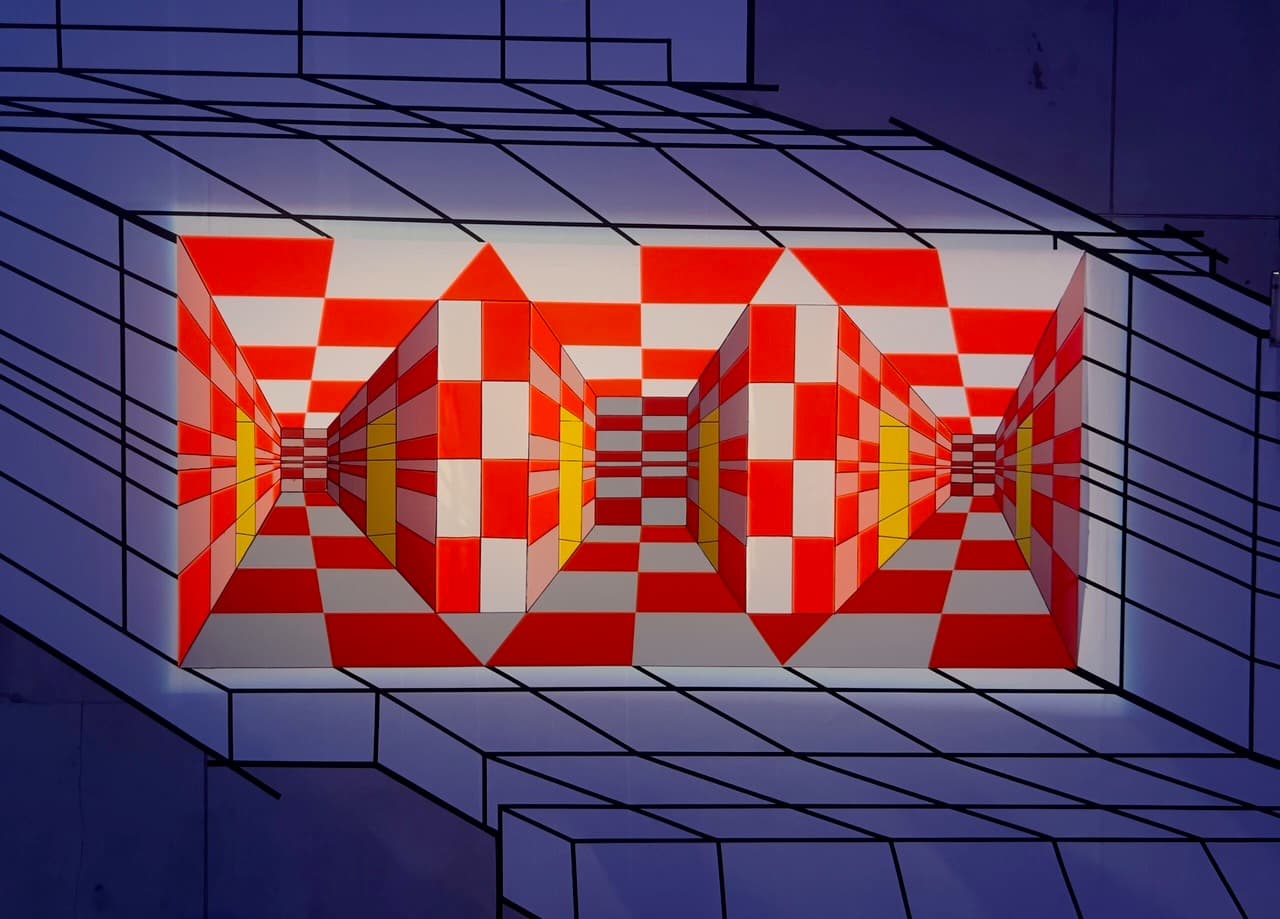
Image: Stefan Busch – www.stefanbusch.com
Tape Art has developed into an art form of its own, breaking down traditional boundaries between street art, graffiti and installation art.
Especially in Berlin, a city that has been an epicentre of alternative art and culture for decades, Tape Art has found a natural home, opening up innovative ways to shape and transform public spaces and urban landscapes.
Valeria Losikova, known as Fabifa, is a contemporary Tape Art artist. She has lived in Berlin since 2015 and has transformed our shopfront windows with her vibrant artistic style, flowing lines and vivid colours, turning them into something truly unique.
Reason enough to take a closer look at the multifaceted world of Tape Art, explore its origins and examine its influence on contemporary art.
A Functional Product with Creative Potential: (Colourful) Adhesive Tape
The history of Tape Art – much like mural art – is closely connected to the development of urban art and graffiti culture. Its roots can be traced back to the late 1980s and early 1990s, a period when urban spaces were shaped by major political and social change.
Creative minds were searching for new, fast and simple forms of expression, often without official permission. Their works were not only intended to make an aesthetic impact, but also to encourage reflection – on impermanence, the transformation of cities and the relationship between art and society.
At the hardware store, just one aisle away from the paints and spray cans, you can find a functional product with enormous creative potential: adhesive tape!
If an artist also has a strong sense of line, proportion and spatial effect, it almost does not matter whether they work with simple masking tape, duct tape or specially produced art tape. Adhesive tapes are lightweight, flexible and quick to work with, making it possible to create impressive large-scale installations, geometric patterns and abstract compositions.
Berlin’s Creative Scene – Historical Context and the Role of Individual Expression
Over the past few decades, Berlin has established itself as a magnet for creative movements. Political upheaval and cultural renewal have provided fertile ground for experimental art forms such as Tape Art, and since the fall of the Berlin Wall, the city has experienced an extraordinary creative boom. Empty walls in former industrial areas, abandoned buildings and improvised galleries continue to offer countless opportunities for creatively transforming urban spaces.
Tape Art fits perfectly into this environment: it can be created quickly, requires relatively little material and can be installed and removed without major logistical effort. “Wenn man sich’s schön macht, auch wenn’s hässlich ist. Das ist Berlin, Berlin, Berlin…” – “Making it beautiful, even when it’s ugly. That’s Berlin, Berlin, Berlin…” – as the city’s unofficial anthem puts it. So it is hardly surprising that colourful new Tape Art works continue to appear on façades, in courtyards and even in underground stations across Berlin. This diversity contributes to the vitality of Berlin’s art scene and gives Tape Art its particular appeal – especially through the individual expression found within the city’s Tape Art community, where personal themes and experiences become visible.
Events such as Berlin Tape Art Week have also created platforms where local and international artists can meet and present their work. Official exhibitions in museums and alternative galleries have helped the medium gain wider recognition – not only in Germany, but around the world.
Innovative Tape Art Projects from London and Paris to New York and Asia
Although Berlin is considered one of the most important centres for Tape Art, this art form is certainly not limited to the German capital.
London and Paris have long represented an exciting mix of tradition and avant-garde within the European art scene. Tape Art has also established itself as a popular medium in both cities. In London, artists create fascinating contrasts between historic buildings and modern architecture. In Paris, Tape Art installations can resemble contemporary tapestries, combining the city’s historic character with modern creativity. Numerous temporary exhibitions and festivals in both cities demonstrate that Tape Art is far more than a passing trend.
New York City, one of the birthplaces of modern graffiti and street art, has also become an important setting for Tape Art. Artists create complex geometric patterns and large-scale installations across the city’s façades, often reflecting New York’s energy and constant transformation. Projects such as Tape Art festivals in Brooklyn combine the urban energy of New York with the creative freedom of the medium.
Across Asia, particularly in cities such as Tokyo, Seoul and Hong Kong, Tape Art is also attracting increasing attention. In places where tradition and high-tech culture meet, the medium offers exciting possibilities for exploring cultural identities and redefining urban spaces.
Tape Art and Sustainability: A Craft Reflecting Urban Creativity and Influencing Contemporary Art
Tape Art has transformed streets in recent years, but unlike permanent sculptures or paintings, Tape Art works are usually temporary and closely connected to the context of the place in which they are created.
One of Tape Art’s most significant contributions to contemporary art lies in the medium itself. While traditional painting and sculpture rely on established materials such as oil, acrylic or stone, Tape Art offers a radically different approach. It demonstrates that everyday objects – in this case adhesive tape – can become the basis for aesthetically compelling and thought-provoking works of art.
**It combines technical precision with free artistic interpretation. This combination is part of what makes the medium so fascinating: it challenges artists technically while opening up a broad spectrum of creative possibilities that conventional art forms may not offer. In doing so, Tape Art challenges traditional ideas about art and craftsmanship and inspires artists around the world to experiment with