
Mural Art: The Art of Wall Painting
Illuseum Berlin
25. Sept. 2026
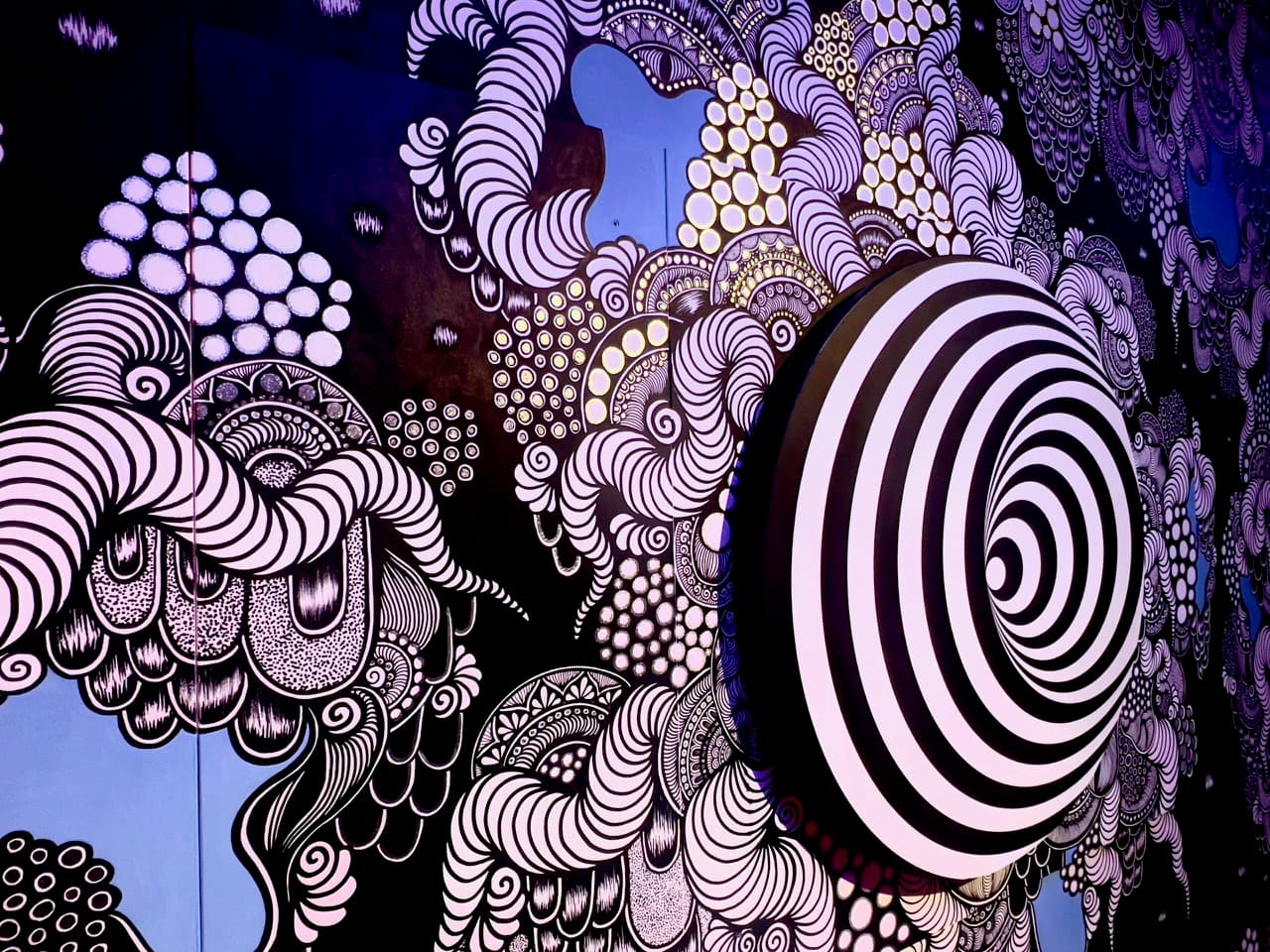
Mural painting has existed for thousands of years, making it perhaps one of the oldest art forms in human history.
In our blog article about “Anamorphosis”, we already touched on illusionistic wall painting. Now we are taking a deeper look into the history and meaning of Mural Art – especially because hardly any German city is as closely associated with it as Berlin.
The term “mural” comes from the Latin word “murus”, meaning “wall”. Wall art can be almost anything: from traditional murals to modern graffiti styles. Ever since humans began painting with colour, they have also painted on walls. And that was a very, very long time ago!
From the Stone Age and the Middle Ages to Antiquity and Modern Street and Mural Art
Murals are certainly not a new invention – quite the opposite! Around 65,000 years ago, Neanderthals were already leaving coloured markings on stone. Early prehistoric cave art consisted mainly of engraved symbols and simple depictions of animals and humans, serving as an additional form of communication alongside visual signals such as smoke and acoustic signals such as drumming.
In antiquity, mural painting flourished in cultures including the Maya in the Americas, the Nubians in Africa and civilisations across Asia – but particularly in ancient Europe. Remains of large wall paintings have been found in Germany and Greece, while in ancient Rome, art on walls became a major trend and was perhaps more popular than ever before or since. Almost every home was decorated with colourful wall paintings depicting scenes from everyday life, mythology and erotic imagery.
During the Middle Ages, wall art became part of sacred architecture for several centuries. Reflecting the strong influence of Christianity, paintings predominantly depicted biblical scenes and saints. While Romanesque and Gothic murals were often relatively simple, they became increasingly realistic and detailed during the Renaissance and later the Baroque period. Many of the most famous works were created using the fresco technique, which became synonymous with mural painting.
Communication and Creativity Beyond Four Walls: Modern Wall Art as a Message for Making the World a Little Better and More Colourful
After mural painting had gradually faded from prominence for several centuries, it was rediscovered at the beginning of the 20th century, initially particularly in socialist contexts. One important movement in modern mural painting developed in Mexico, where artists often depicted visions of a flourishing future. This artistic movement became known as Muralismo.
With the rise of modern Street Art, mural painting also became increasingly widespread throughout Europe. Today, many large-scale wall paintings can be found particularly across northern and eastern Europe and Germany. These are commonly referred to as murals. They should not necessarily be confused with graffiti, although the boundaries between the two can sometimes be fluid.
Murals, as we understand the term today, are often enormous and can cover entire building façades. They are created using paint, spray cans or even projections and are usually intended for public viewing. While graffiti is often associated with quick tags or unauthorised artworks, murals are generally created with permission or even commissioned to transform and enhance neighbourhoods.
They are undoubtedly impressive to look at, but often carry a meaning that goes far beyond visual aesthetics. In their modern form, murals can serve as a public voice – art with a message.
Many artists use them to address social issues. Murals may portray activists, advocate for social equality or draw attention to environmental challenges such as climate change, endangered species and sustainable solutions. They are also frequently used as a form of political expression, including criticism of governments or perceived injustices.
Murals Can Be Created in Many Different Ways – Depending on Technique, Material and Style. Let’s Take a Look at Some of the Most Common Methods.
The most traditional form of mural painting uses brushes and rollers with acrylic or exterior paints. This technique allows artists to create detailed works that can remain visible for many years.
Another Street Art technique combines spray paint with stencils to create precise motifs. Some artists print their work on paper or fabric and then attach it to walls. This technique is known as paste-up or poster art. It is faster than painting, although usually less durable.
Modern murals can also incorporate light and digital art, for example through temporary projections onto buildings, such as those seen during Berlin’s annual Festival of Lights.
Whatever the technique, a great mural needs an idea, permission – if it is intended to be legal – and a generous dose of creativity!
If You Want to Experience Murals in Person, There Are Some Must-See Places Around the World
Today, murals can be found all over the world – from Berlin and Rio de Janeiro to Los Angeles. They are not only works of art but also expressions of identity, culture and protest. They can celebrate cultural identities, history, traditions and the diversity of a city or community.
Berlin is a paradise for Street Art! Kreuzberg and Friedrichshain in particular are home to impressive murals, including works by artists such as Blu and Victor Ash. The East Side Gallery transformed sections of the former Berlin Wall into an open-air artwork and features, among many others, Dmitri Vrubel’s famous “Fraternal Kiss”.
In London, Shoreditch is famous for Street Art and murals associated with artists such as Banksy and many others, with new works constantly appearing. From enormous portraits to colourful Pop Art, Los Angeles offers murals around almost every corner, particularly in Venice Beach and Downtown LA. Buenos Aires is famous for its colourful murals, especially in Palermo, while Bogotá has one of South America’s most vibrant mural scenes, combining political expression with Street Art aesthetics.
Whenever you travel, it is worth keeping an eye out for murals – they can sometimes tell you more about a city than any travel guide!
Our Conclusion: Murals Are More Than Just Paint on a Wall
There are countless styles of wall art to discover around the world. Walls are everywhere – and that is precisely what lies at the heart of Mural Art: grey walls become canvases for art with a message!
From tiny Street Art motifs to enormous murals that define entire streets, murals are much more than paint on a wall. They tell stories, communicate and document, make statements and transform grey urban spaces into vibrant works of art.
For us, Mural Art is one of the most exciting art forms of our time. It combines creativity, culture and social issues in powerful visual works. Whether in Berlin, New York or your own city, murals have the ability to transform places and inspire people – and that spirit of changing perspectives is also at the heart of what we do at Illuseum Berlin.