Digital Art – Is It “Real”?
Illuseum Berlin
25. Sept. 2026
From the evolution of traditional techniques, with which we create something new with our own hands, to the digital transformation of art.
The definition of art covers an almost infinite spectrum, yet it is often treated as an afterthought. Today, works by famous painters and sculptors, poets and authors, composers and singers – and many other creative minds – are considered particularly valuable, especially when their creators are no longer alive. These people lived in a time when brushes, ink, paint and paper were precious materials and when texts and music were not created with artificial intelligence (AI). Whether we see that as a good or bad thing today is another question.
Thanks to the development of new tools and techniques, the art world is undergoing a profound transformation. Over the past few decades, digital art has become one of the most dynamic and exciting forms of creative expression. Today, it encompasses a wide range of media, from digital painting and 3D models to interactive installations.
Among the earliest forms of digital art were computer graphics created in the 1960s – so digital art has actually been around for quite some time! Software such as Adobe Photoshop, Blender and Procreate enables artists to realise their visions with unprecedented precision and possibilities. Over the past decade, the integration of AI and other innovative technologies has opened up entirely new creative horizons.
Art Meets Digital Technology: Virtual Reality and Augmented Reality as Immersive Art Experiences
We are living in the midst of the digital age. Naturally, this transformation is also reflected in art – and here at Illuseum Berlin.
Some people may therefore ask: Is digital art actually “real”?
Our answer is a clear YES. As a museum of illusions, optical phenomena, unique art, immersive technologies and interactivity, digital art plays an important role in what we want our visitors to experience.
Virtual Reality (VR) and Augmented Reality (AR) are modern technologies that expand the boundaries of artistic creation. Artists can create immersive experiences that quite literally draw audiences into the artwork. VR galleries and AR installations allow us to experience art in entirely new and interactive ways.
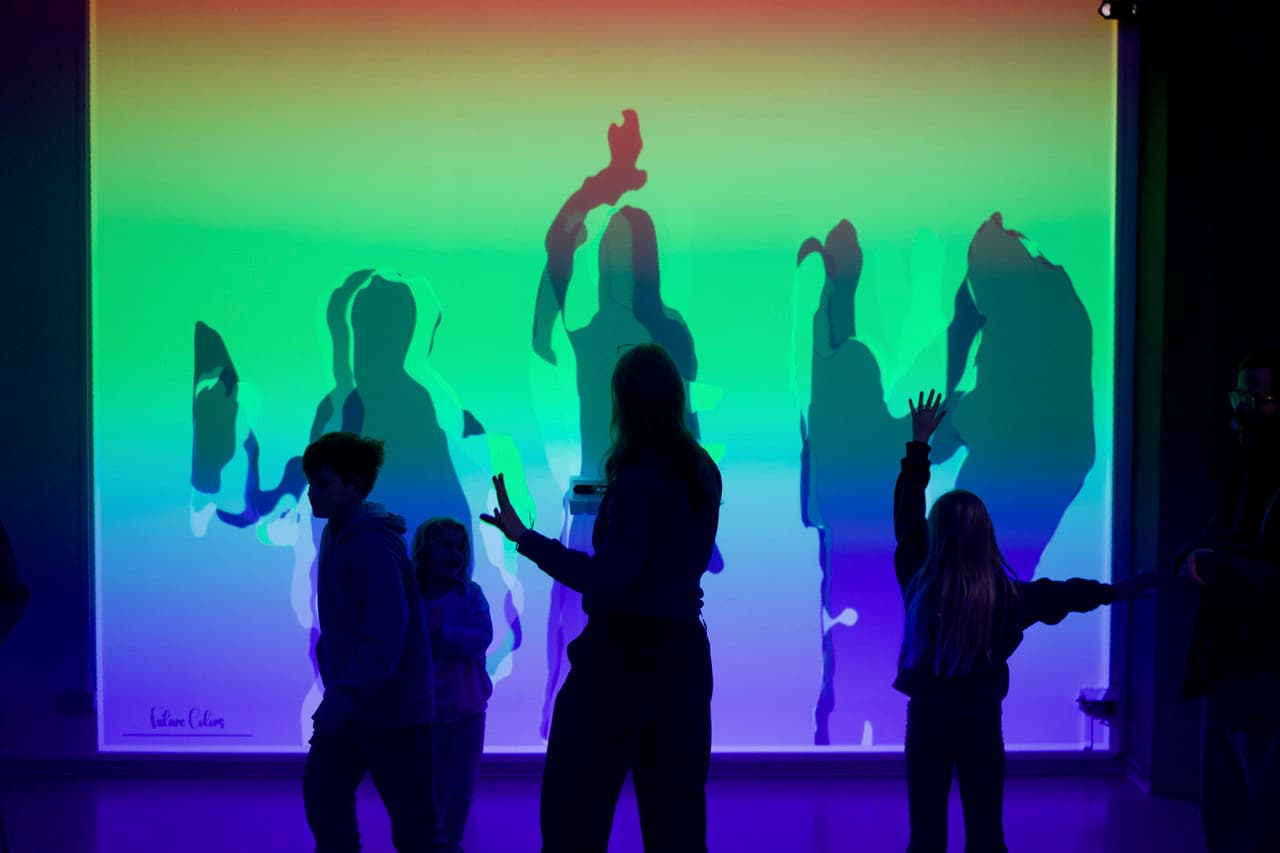
At Illuseum Berlin, artist Tiziano Mirabella’s “Window of Illusions” uses video mapping and a tracking camera to integrate visitors into a digital painting, allowing them to become part of the projection themselves. The artist duo “Magnificent Matter” transforms themes from biology into immersive installations on our LED screen by lighting designer Lars Murasch. Meanwhile, the mechanical art of Florian Görlitz invites visitors to escape the rush of everyday life through the hypnotic effects of his works, creating space for creativity and awareness in the here and now. In our Augmented Reality exhibition “Alice in Wonderland”, Benjamin Mitchley’s works come to life through your smartphone, inviting you to enter a new dimension of art.
Our mission is to share knowledge while creating an extraordinary experience: art that can be touched, explored and experienced – including digitally. Art can be so many things, which is why our changing exhibitions aim to reflect Berlin’s vibrant art scene and explore how the digital world creates and influences optical illusions.
Let’s take a look at current trends and their impact on the world of art.
Today, artists use machine learning to create algorithms capable of independently generating visual works. The well-known AICAN® algorithm, for example, can create images that can be difficult to distinguish from works created by human artists. AI algorithms can also allow users to transfer the style of a famous painting onto their own photographs, creating a connection between traditional art and modern media. Fascinating – and perhaps a little spooky at the same time.
Artificial intelligence has the potential to fundamentally change the way art is created, interpreted and consumed. AI-powered tools such as DeepArt and DALL-E can generate images that imitate the style of particular artists or develop entirely new visual concepts. These tools give artists access to an almost limitless source of inspiration and enable them to explore new creative approaches.
But AI is far from the only technology transforming the digital art scene. Blockchain technology, for example, has fundamentally redefined concepts of originality and ownership in digital art. With the introduction of Non-Fungible Tokens (NFTs), artists have been able to sell digital works as unique digital assets rather than endlessly reproducible files.
The fact is that digital art, supported by artificial intelligence and new technologies, is more than just a trend. It represents a transformation that is taking creative expression to a new level. As artists explore new tools and platforms, new possibilities for interaction are emerging as well. The future of art will undoubtedly be shaped by these developments, and it will be fascinating to see how these technologies continue to evolve and influence the art world.
Our conclusion: We place no limits on creativity.
The integration of AI into the creative process has sparked an important debate about the authenticity and creative value of art. Who is the true creator of a work: the person who developed or directed the algorithm, or the AI that generated the final result? These questions challenge not only the role of the artist, but also how we perceive and value art in the digital age.
At the same time, more and more artists are using new technologies as additional practical tools to bring their own ideas to life. So what would the art world – and our museum visitors – gain by excluding computers, AI and other technologies as legitimate artistic tools? And where would art be today if new creative techniques and technologies such as acrylic paint, tape art, video or augmented reality had been rejected from the very beginning?
At Illuseum Berlin, we place no limits on art. Yet at the heart of this transformation, the essence of art remains the same: human expression and the ability to communicate emotions and ideas and make them tangible – regardless of the medium being used.
Come and visit us at Illuseum Berlin, get inspired and experience optical and digital illusions as a new reality. Afterwards, you may no longer find yourself asking whether digital art is “real”.